The Sustainable Jeans Guide: Cotton, Stretch, Weight and Wash
Sep 25, 2026 · Dana Reyes
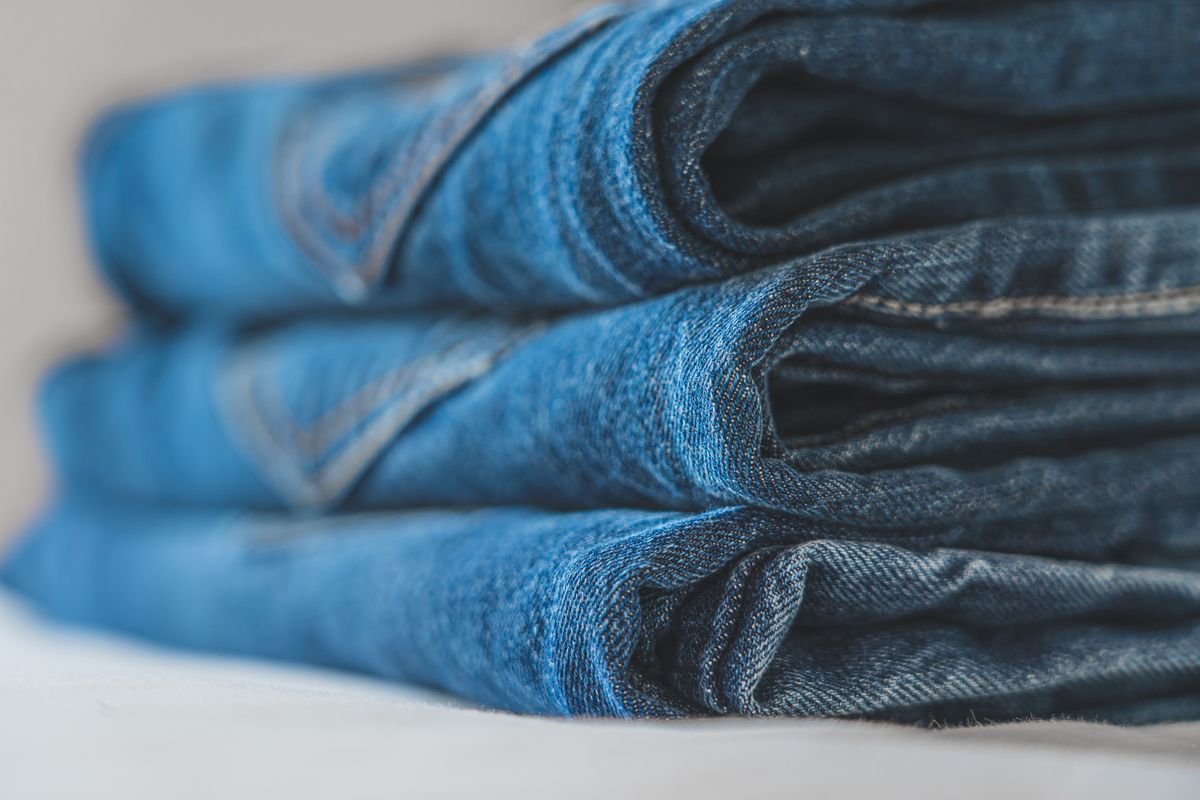
Jeans are where sustainable-fashion advice goes wrong most confidently, because almost every claim on a hangtag describes one stage of a long process. Cotton is one stage, the stretch fibre another, the wash a third — and the wash is the one with the worst documented human cost. This guide takes them in the order you meet them on a product page, then closes with the arithmetic that actually decides a purchase.
What the cotton claim covers
Three materials get sold as better cotton in denim, and they are better at different things.
Organic cotton is defined at the farm. Organic certification rules out synthetic pesticides, synthetic fertiliser and genetically modified seed. That part is not in dispute, and it is a real difference: cotton is a pesticide-intensive crop by any measure. What is in dispute is water: the widely repeated claim that organic cotton uses far less of it traces back to a Textile Exchange life-cycle assessment that compared its organic results against a separate, earlier study of conventional cotton. Critics, including the Transformers Foundation’s 2021 report on cotton data, pointed out that the organic fields in that comparison were largely rain-fed while the conventional ones were irrigated — a comparison about geography, not farming method. Textile Exchange acknowledged the framing was misleading and withdrew the claim. The defensible version is narrower: organic cotton is reliably better on pesticides and seed, and its water footprint depends mostly on climate and irrigation where it was grown.
Recycled cotton is better at diverting waste and worse as a fibre. Mechanical recycling shreds fabric back into fibre, and shredding shortens it. WWF’s life-cycle assessment of denim reuse and recycling measured the recycled cotton it tested at shorter fibre length and lower strength than the virgin cotton it was compared against. Shorter fibre means weaker yarn, so recycled cotton is almost always blended with virgin fibre, and in denim the recycled share is typically kept modest for that reason. “Contains recycled cotton” usually describes part of the weft, not the garment.
Conventional cotton carries no third-party claim at all, which is the honest way to read it: not proven harmful in this garment, simply unverified.
Note where a GOTS label sits in all this. The organic claim attaches to the processing chain from the first handling stage onward, not to the farm, and the label grade tells you how much of the fibre is organic.
The stretch problem
Elastane is the most consequential ingredient in a pair of jeans and the one that gets least attention, because on a composition tag it reads as a rounding error. Stretch denim usually contains a small single-digit percentage of it.
That small percentage decides what happens at the end of the garment’s life. In mechanical recycling elastane behaves nothing like cotton: rather than breaking down into fibre, it stretches, wraps around rotating parts, forms clumps and contaminates the output. It is part of why mechanically recycled yarn is blended with virgin fibre, and it also complicates chemical recycling, since processes built to dissolve cellulose are not built for polyurethane.
The result is a real trade rather than a trap. Stretch jeans fit more bodies and are more comfortable to sit in. A rigid 100% cotton jean is what recyclers can process and sheds fewer synthetic microfibres in the wash. Some brands get stretch from the weave instead; if a product page says so, it is worth more than it sounds.
Under GOTS rules elastane is an allowed additional fibre, with a ceiling on virgin synthetic fibre and a separate one on recycled synthetic. At the “organic” grade the whole non-organic allowance is small, which is why GOTS-labelled stretch denim tends to sit at the low end of elastane content. A constraint, not a claim about comfort.
Weight, and how to read the ounces
Denim weight is given in ounces per square yard, and it is the most useful number on a product page because it is hard to fake. One ounce per square yard is roughly 34 grams per square metre in metric listings.
Conventions vary by who is describing them, so treat the categories as approximate. One common split puts lightweight under about 12 oz, midweight from 12 to 16 and heavyweight above 16; another, used more by general apparel suppliers, calls 8 to 12 lightweight, 12 to 14 midweight and 14 and up heavyweight. A loosely woven heavy cloth can feel lighter than a dense lighter one.
Heavier denim takes longer to break in, resists abrasion better, holds its shape and fades with more contrast. Lighter denim is comfortable from the first wear, breathes, and wears through sooner at stress points. For a jean worn weekly across three seasons, midweight is the boring correct answer. Go heavy for the fade if you will tolerate the break-in; go light where heat is the constraint.
Selvedge is a separate variable, often confused with quality. It refers to the self-finished edge from a shuttle loom: a construction detail, not a grade of cotton and not a promise about durability. A 12 oz selvedge jean is still 12 oz.
What the finish cost
Denim is usually dyed with indigo and then finished to look worn, and the finishing stage is where the industry’s worst documented harm sits.
Stone washing tumbles jeans with pumice to abrade the surface and pull indigo off. It uses water, produces a sludge of broken-down stone that must be filtered out and disposed of, and shortens the life of the cloth. Enzyme washing does a softer version of the same job with cellulase and damages the fabric less.
Sandblasting is a different category of problem. It produced high-contrast worn effects by blasting garments with silica sand, and the dust causes silicosis, a progressive and incurable lung disease. After the first cases were identified, Turkey banned sandblasting with silica-bearing abrasives in 2009, by which point dozens of garment workers had died. Reporting by the BBC and by labour-rights organisations found that production then moved to Bangladesh, China, Pakistan and Egypt, and a 2013 investigation of Chinese denim factories by the Clean Clothes Campaign and partner groups concluded that voluntary brand bans were not holding. GOTS version 4.0 lists sandblasting of denim among prohibited finishing methods, on the grounds that such methods harm workers.
Laser and ozone are the two replacements that have scaled. Laser marks a programmed pattern onto the cloth and is dry at the point of application; ozone oxidises indigo and reverts to oxygen. Both remove the silica hazard, and equipment makers publish large reductions in water and chemical use against conventional recipes — vendor figures, describing one stage. A laser-finished jean is still rinsed and softened afterwards, so a claim about the finish is not a claim about the garment.
None of this is visible in the finished product. A laser fade and a hand-sanded fade can look identical on a hanger, which is why published brand policy is the only route to an answer.
The arithmetic that actually decides it
“Buy less, buy better” is easy to agree with and hard to act on, so make it concrete. What matters is cost per wear, and the unit that drives it is wears, not years.
A pair worn once a week for four years gets worn roughly two hundred times; at $150 that is about seventy-five cents a wear. Worn twice a week for two years it also gets worn two hundred times — same arithmetic, half the calendar. Meanwhile a $60 pair that bores you or blows out after a dozen wears costs five dollars a wear, and no amount of organic cotton changes that.
Two consequences. Fibre choice matters less than whether you wear the thing, so fit and rise beat certification when the two conflict. And the largest lever after purchase is how often you wash: denim does not need laundering after every wearing, and airing, spot cleaning and cold washes slow both colour loss and fibre fatigue. Keeping jeans out of a hot dryer protects the elastic fibre if there is one.
Repair is the last piece, and jeans are among the easiest garments to repair: a crotch blowout and a torn knee are both patchable from the inside, and a hem is a ten-minute job — our darning and visible mending basics start there.
FAQ
- Is organic cotton denim actually better for the environment?
- Reliably on two things: organic certification rules out synthetic pesticides and genetically modified seed. Not reliably on water. The widely repeated figure that organic cotton uses far less water came from comparing two separate life-cycle assessments in which the organic fields were mostly rain-fed and the conventional fields irrigated; Textile Exchange acknowledged the comparison was misleading and withdrew the claim. Where cotton is grown and whether it is irrigated matter more than the organic label.
- Can stretch jeans be recycled?
- Not through mechanical recycling at any meaningful scale. Elastane does not break down like cotton in the shredding process; it stretches, clumps and fouls the machinery, and it also complicates chemical routes built for pure cellulose. A rigid 100% cotton jean is the version current recyclers can actually handle.
- How can I tell whether a faded finish was sandblasted?
- You generally cannot tell by looking, which is the problem. Laser, ozone, enzyme and abrasion finishes produce similar effects. Look for a published brand policy instead: GOTS version 4.0 explicitly lists sandblasting of denim among prohibited finishing methods because of the harm to workers, so a certified garment is one route to an answer.
Edited by
Dana Reyes
Researches garment construction, fibre content and brand sustainability claims. Ten years between the retail floor and editorial fact-checking.