Darning and Visible Mending Basics
Sep 25, 2026 · Dana Reyes
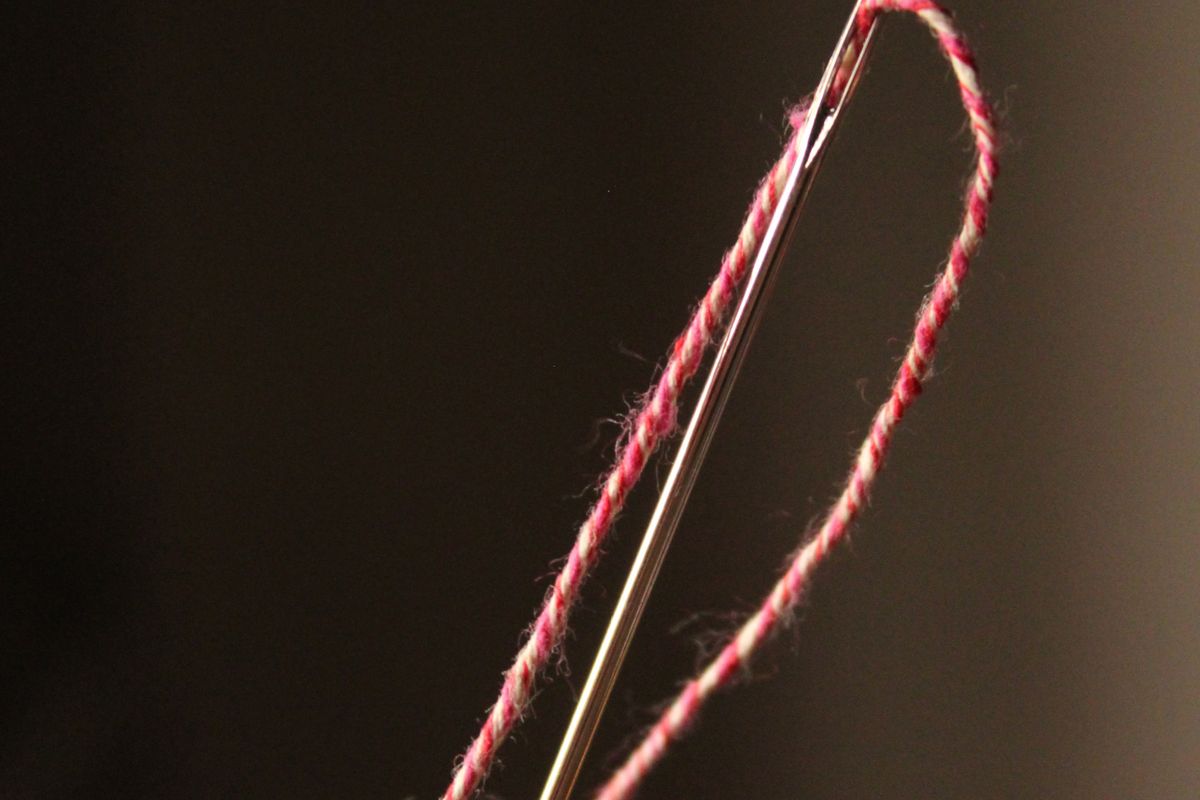
A hole in a knit is not the end of the garment. Knitted fabric is loops of yarn held together by loops of yarn, which means it can be rebuilt stitch by stitch with nothing more than a needle and some thread. Darning is that rebuild, and it is the single most useful repair skill for anyone whose wardrobe is mostly knitwear.
What is worth mending
Start with the damage, not the garment.
Worth doing at home: moth holes and small snags up to about a centimetre or two across; thinning at the elbows, cuffs, and underarms before it breaks open; a dropped stitch that has run down a panel; a split seam; a hole in a sock heel. These are local problems in otherwise sound fabric.
Better left to a specialist: holes larger than a coin; damage across a seam or a shaped area like a shoulder or armhole; fine-gauge cashmere where you want the repair invisible; knitted fabric that has gone thin and brittle overall, because there is little left to anchor a darn to.
The timing point is worth more than the skill point. A thin patch is easier to save than a hole. Darning over an area that has not broken yet — reinforcing from the back before it opens — takes half the time and looks better than waiting.
What you need
Very little, and none of it has to be branded:
- A darning needle. Longer than a sewing needle, with a large eye and a blunt tip that slides between loops rather than splitting yarn.
- Thread or yarn close to the weight of the original. Match the fibre if you can, because wool and cotton behave differently in the wash — the same reason a composition tag is worth reading before you buy. The best match is often yarn unpicked from a hidden seam or the inside of a hem.
- Something to hold the area flat and taut. A darning mushroom or a darning egg does this for socks and small round areas. For a flat sweater panel, an embroidery hoop or nothing at all works — a firm pillow across your knee is enough.
- Small sharp scissors and good light. That is genuinely it.
Two stitches that cover most repairs
Duplicate stitch (sometimes called Swiss darning) is for thin areas and holes with intact edges. You are not filling a gap; you are tracing over the existing knitting, following the path of each loop so new yarn sits where the old yarn ran. Work on the right side. Bring the needle up at the base of a loop, pass it under the loop above, back down where you started, and repeat across the row. With matching yarn at even tension it nearly disappears, and the new yarn takes the abrasion instead of the old.
Plain darning is for an actual hole. You build a small woven patch inside the gap and anchor it to the fabric around the edges.
How to darn a small hole
Work from the wrong side if you want the mend to be discreet, and support the area over a mushroom or hoop so the hole lies flat without being stretched.
- Anchor the thread. Secure it in the fabric a centimetre or so outside the hole — a couple of small backstitches into the surrounding knitting — and bring the needle up at the edge of the hole. Do not knot it on the surface; a knot makes a lump and works loose.
- Lay the warp. Take the thread straight across the hole in parallel lines, close together but not overlapping, and let each end run onto the sound fabric beyond the edge. These threads are the foundation; they must extend past the damage onto fabric that is still strong.
- Weave the weft. Turn the work, or change direction, and pass the needle over and under the threads you just laid, alternating on each pass so the new rows interlace with them. Keep the rows touching, and pull each one through before you tension it.
- Match the tension. This is the part people get wrong. Pull too tight and the surrounding knitting puckers into a rosette; leave it slack and the patch sags and catches on things. Aim for the tension of the fabric itself — the patch should lie in the same plane as the sweater, neither domed nor puckered.
- Secure into sound fabric. Run the last few stitches out onto the surrounding knitting, take two small backstitches, and trim close. Weaving the tail back through the darn for a couple of centimetres is tidier than cutting it short.
On the first attempt the rows will be uneven. That is normal, and even tension matters more than even spacing.
Why a visible mend is fine now
A darn used to be something to hide, and for a long time a repaired garment read as a garment its owner could not replace. That reading has largely gone. Visible mending — contrast thread, a deliberately decorative patch, running stitches in a colour that does not match — is now common enough that it reads as maintenance rather than shortage. It is also the more practical choice more often than you would expect: an invisible mend has to match yarn, colour, gauge, and tension, and any one of those slightly off looks worse than an obvious repair.
The environmental argument is the plain one: a garment that already exists carries no new fibre, no new dye, and no new freight.
When to hand it to a professional
Pay for a repair when the garment is valuable to you and the damage is beyond a small hole, when the knit is very fine or the yarn unusual, or when you want the mend genuinely invisible on a piece you wear to work. Specialist knitwear repair services and, for the highest-value pieces, reweaving can rebuild an area by hand-reconstructing the knitting itself, which is not something you can do at the kitchen table. Ask what fibre they will use and whether the repair will change how that area drapes or stretches — a darned patch is usually a little stiffer than the fabric around it.
After the mend
Treat a repaired area gently. Wash by hand or on the gentlest cycle the care label allows, keep the water cool, and dry flat, since a patch that is stiffer than its surroundings will distort if it is wrung or hung wet. The wool washing method applies here with one addition: do not rub the patched area. Expect to check the mend once a season: the weak point moves to the edge of the patch, and catching new thinning there early is a five-minute job rather than another hole.
If you are new to this, start on a sock or on the inside of a cuff. Both are low-risk, both are hidden if it goes badly, and the technique is identical to the one you will use on the elbow of your best sweater.
FAQ
- Can a hole in a knitted sweater really be repaired?
- Small ones, yes. Holes up to roughly a centimetre or two, moth holes, and thin patches before they break open are all straightforward to darn. Large holes, laddered knitting across a whole panel, and fabric that has gone brittle with age are usually better handled by a repair specialist.
- Can I use ordinary sewing thread?
- For reinforcement on a fine knit, matching sewing thread can work, but a darn is strongest when the thread is close to the weight of the yarn you are repairing. Too fine and it cuts the surrounding loops; too heavy and it distorts the fabric. Yarn pulled from an inconspicuous seam is the closest match you will find.
- Will a mended sweater look obviously patched?
- It can be nearly invisible if you match the yarn and work with the existing stitches, or deliberately obvious if you choose a contrast colour. Both are accepted now. An invisible mend needs finer work and more patience; a visible one forgives uneven tension.
Edited by
Dana Reyes
Researches garment construction, fibre content and brand sustainability claims. Ten years between the retail floor and editorial fact-checking.