What "GOTS Certified" Actually Means on a Label
Sep 25, 2026 · Dana Reyes
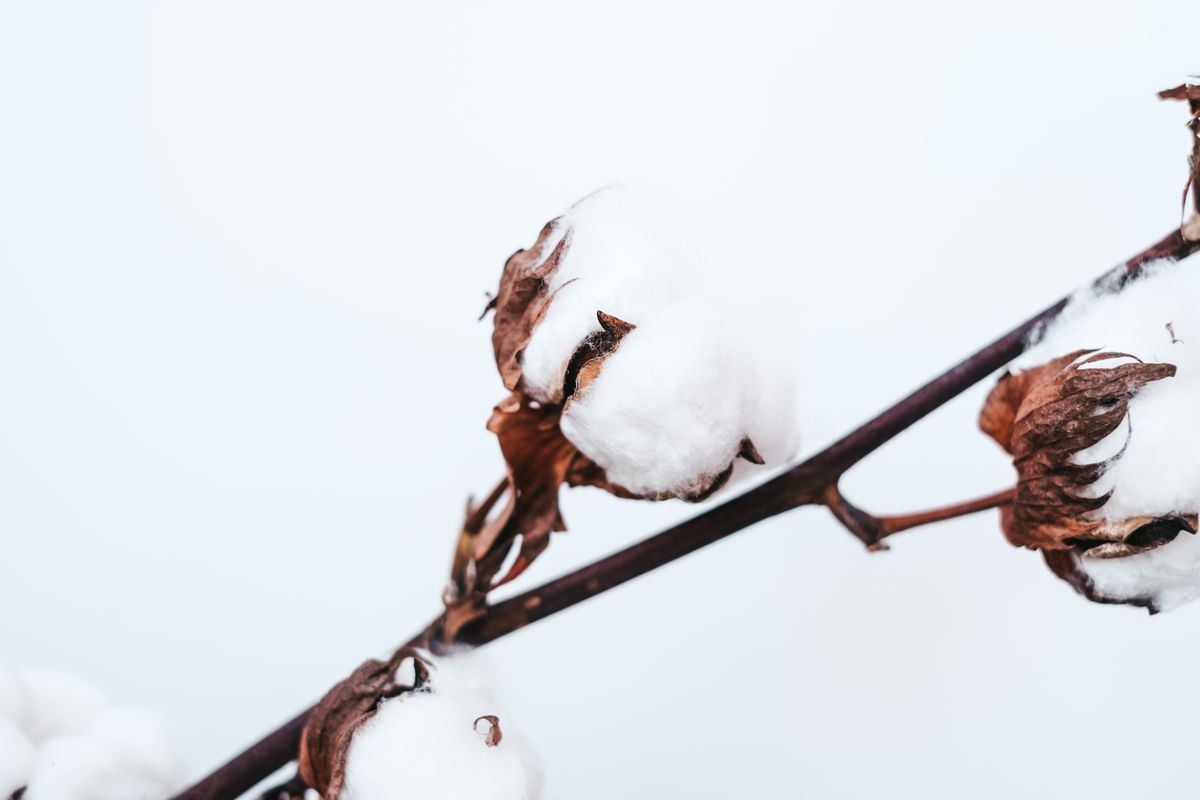
GOTS is the most widely used label on clothing sold as organic, and one of the most confidently misread. It does not certify the farm, it does not mean a garment is all natural, and no premium goes to anyone. What it certifies is narrower and more useful: what happens to an organic fibre after it leaves the field, up to the finished, labelled product on the shelf.
GOTS starts where organic farming ends
Before any fibre enters a GOTS chain it must already be certified to an organic production standard that Global Standard accepts — an IFOAM-accredited scheme, the EU organic regulation or the US National Organic Program among them. GOTS picks up at the first handling stage and stays through fibre processing, spinning, knitting or weaving, dyeing and finishing, manufacturing, packaging, labelling, trading and distribution. Each operator holds its own certificate, and there is no partial participation: a factory cannot certify some stages and opt out of others.
Every operator is audited on site annually and shipments move with transaction certificates. Unlike recycled-content standards built on mass-balance accounting, GOTS relies on physical segregation and volume reconciliation: certified material is kept apart from conventional material, and volumes are checked against what was actually bought and sold.
It follows that “GOTS cotton” is not a recognised phrase. The correct claim is that a product is GOTS-certified, with the organic fibre content stated separately. Global Standard lists “GOTS cotton” and “made with GOTS-certified fabric” among prohibited claims. Certified cloth sewn in an uncertified factory breaks the chain.
The two label grades, and the percentages
A garment is “organic” at 95% certified organic fibre or more, excluding accessories, or “made with x% organic materials” at 70% or more, with the exact share stated. Below 70% there is no GOTS label, and there is no higher tier above 95%.
The remaining share can only come from a defined list of additional fibres, capped at 5% for the organic grade and 30% for the made-with grade. Conventionally grown cotton is prohibited at any level, even when it is non-GMO or recycled, so every cotton fibre in a GOTS good must be organic or organic in-conversion. Virgin polyester is excluded too; any polyester blended in has to be recycled from pre- or post-consumer waste. Wool must come from mulesing-free sources, evidenced by regional practice or by an additional certification such as the Responsible Wool Standard.
A garment labelled “made with 70% organic cotton” is genuinely certified and genuinely 30% something else. Only the label tells you which you hold.
Where the certificate falls silent
GOTS does not certify farming practice directly, beyond requiring that an accepted organic certificate exists. It does not test durability, so a certified garment is not automatically better made. It does not cover your laundry, where much of a garment’s lifetime impact accumulates, nor end-of-life. Every certification has a boundary, and the way to read any label is to ask which question it was designed to answer. GOTS answers one well: was this organic fibre processed under audited environmental and labour conditions.
Three readings shoppers get wrong
Treating GOTS as a synonym for organic is the first misreading. Even at its strictest, a certified garment can contain a minority of non-organic fibre by design. Reading it as a fair-trade scheme is the second. GOTS does include mandatory social criteria grounded in the core conventions of the International Labour Organization: no child or forced labour, freedom of association and collective bargaining, safe conditions, non-discrimination, no excessive hours, regular rather than casualised employment, and pay at or above the higher of the legal minimum or the industry benchmark. These are real requirements, audited on site, and far more than most textile labels ask. But they attach to processing facilities rather than farms, no premium flows back to producers, and where a living wage sits above the local legal floor the standard works toward closing the gap rather than certifying it closed. Fair-trade certification is a separate scheme, and a brand making labour claims usually needs both.
The third is trusting a logo without its supporting detail, which the certification makes easy to avoid.
Verification takes about a minute
A complete GOTS label carries four items: the logo, the label grade, a reference to the approved certification body that did the auditing — Control Union, Ecocert, Oregon Tilth and the Soil Association are among them — and the license number of the certified entity.
Search that number in the public database published by Global Standard at global-standard.org. The record shows the certified entity, its certifier, the scope of what it may do, and whether the certificate is current. Check two things beyond the number resolving. Scope: a facility certified for spinning is not thereby certified for cut-and-sew. Identity: a retailer selling finished certified goods may use the manufacturer’s license number, while one putting its own name to the logo generally has to hold its own certificate.
The same rules apply to product listings online, where a GOTS logo in a website header or footer is a misuse, since it implies everything the store sells is certified. For most purchases this verification is overkill; it earns itself where you pay a premium for the claim. Elsewhere read the composition tag first, since it says what the garment actually is, then check that any claimed standard is named and complete. Our guide to reading composition tags covers that.
How GOTS divides the work with other labels
The Organic Content Standard is a pure chain-of-custody tool: it verifies how much certified organic material reaches the final product and little else, and by Textile Exchange’s own description it does not address chemicals, processing impacts, social issues or legal compliance. An OCS-certified tee can therefore have been dyed and finished under conditions nobody audited. GOTS covers that missing ground, which is why it is usually the stronger signal where both are available.
The Responsible Wool Standard covers what GOTS does not: animal welfare and land management on sheep farms, beyond GOTS’s requirement that wool entering its chain be mulesing-free. Bluesign works at mill level on chemical inputs, resource use and occupational health. OEKO-TEX Standard 100 tests the finished article for harmful residues: useful for skin contact, silent on how the fabric was made. The Global Recycled Standard and Recycled Claim Standard cover recycled content instead.
What the label is buying you
Strip away the misreadings and GOTS still earns its place. It is the reason “organic” on a clothing tag means more than a suggestion: a GOTS label attests that named facilities were audited by a named certifier, that banned inputs such as chlorine bleaching and certain azo dyes were not used, and that baseline labour conditions along the processing chain were examined rather than assumed. Concrete claims, attached to a number you can look up.
The label cannot make the decision for you. A certified garment that does not fit, that you will not repair, or that duplicates something you own carries its certification and none of its benefit. Longevity comes mostly from cut, construction and laundering, which is why our edits on essentials that last lean on those factors.
FAQ
- Does GOTS certified mean the garment is 100% organic?
- Not necessarily. GOTS has two label grades: "organic" requires at least 95% certified organic fibre, while "made with x% organic materials" starts at 70%. The rest can be approved non-organic fibres. Accessories are excluded from the calculation.
- Is GOTS the same as fair trade?
- No. GOTS includes social criteria based on core International Labour Organization conventions covering child and forced labour, freedom of association, working hours and conditions, and wages at or above the legal minimum or industry benchmark. It has no premium paid to farmers, and its audits cover certified processing facilities rather than farms.
- How can I check that a GOTS claim is real?
- A valid GOTS label carries four things: the GOTS logo, the label grade, a reference to the approved certification body, and the license number of the certified entity. Enter that license number into the public database published by Global Standard at global-standard.org to see whether the certificate is current.
Edited by
Dana Reyes
Researches garment construction, fibre content and brand sustainability claims. Ten years between the retail floor and editorial fact-checking.