The Knitwear Buying Guide: Fibre, Yarn Count, Construction and Care
Sep 25, 2026 · Dana Reyes
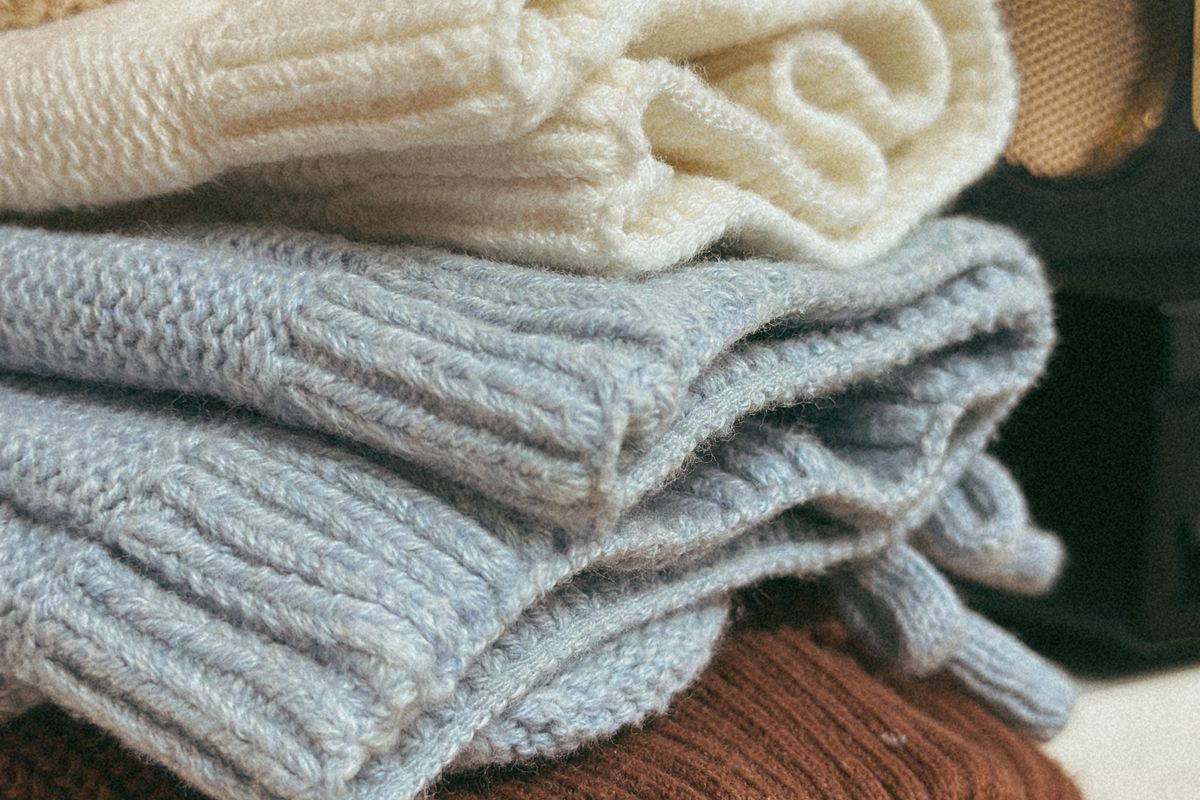
Two sweaters can carry the same fibre name on the label and behave completely differently on the body and in the wash. The difference sits in numbers most listings never print: fibre diameter, staple length, how the yarn was spun, how tightly it was knitted. This guide reads a sweater in that order, then finishes with care, because a garment you send out twice a season is not the same purchase as one you wash at home.
The fibre sets the ceiling
Merino is a breed, not a grade. The FAO’s survey of animal fibres puts wool fibre diameters from about 15 microns in superfine Merinos to 45 in carpet wools, with Merino staple length — the length of one fibre — around 60 to 110 mm on an annual shearing. Fine diameter plus long staple is what makes merino the workhorse: soft enough for next to skin, long enough to spin into a yarn that holds together.
Lambswool is not a breed. It is wool from a sheep’s first shearing, which the FAO puts at three to eleven months, and it is the finest wool that animal will produce — two to six microns finer than the second shearing. It is soft and lofty, with a shorter staple, which matters later.
Cashmere is a legal term in the US, not a marketing one. Under the Wool Products Labeling Act rules at 16 CFR 300.19, fibre may be called cashmere only if it is the dehaired undercoat of a cashmere goat, averages no more than 19 microns, and contains no more than 3 per cent by weight of fibres over 30 microns, with a coefficient of variation no higher than 24 per cent. The fineness is why it feels the way it feels; the short staple is why it wears the way it wears.
Cotton and recycled fibres sit at the other end. Cotton knits are heavier, less elastic and prone to sagging at the elbows, but washable and suited to shoulder-season wear. Recycled wool and cotton have been through a shredder, which shortens the fibre again, so they are usually blended with virgin fibre to be spinnable. A composition tag tells you the blend but not the staple length, which decides how long the sweater lasts. On welfare, the Responsible Wool Standard is the one with teeth: mulesing is prohibited on certified farms, and only all-certified wool may carry its logo.
Yarn count, gauge and weight
Knitwear yarn is specified in Nm — metres of yarn per gram — and a listing usually writes it as 2/28, meaning two plies of 28 Nm folded together; higher Nm is finer yarn. Woolmark’s knitwear manual notes that knitting yarns are nearly always two-fold, because folding two singles against the spinning twist stops the fabric skewing.
Gauge is needles per inch on the machine, and it maps to yarn count: Woolmark’s table puts 7-gauge chunky knits at 10/2 to 14/2 Nm and 14-gauge fine knits at 28/2 to 36/2. Higher gauge means a finer, denser, smoother fabric; lower gauge means bulk and air.
Weight is the least ambiguous number a listing gives you. Fine-gauge knits land around 150 to 250 grams, mid-gauge sweaters around 300 to 500, chunky styles above 600. Fabric weight per square metre is quoted less consistently for knitwear than the weight of the finished piece, so prefer the latter.
Woollen or worsted decides durability
This is the distinction most listings omit, and it is the one that predicts wear. Both start as wool; the difference is what happens before spinning.
Woollen yarn is carded: fibres stay short and randomly arranged, the yarn is bulky and loosely twisted, and the knit is washed afterwards to raise the surface and build loft. Worsted yarn is combed, removing short fibres so the rest lie parallel; the yarn is smooth, compact and tighter.
Woolmark’s manual states the consequence directly: because woollen yarns use shorter fibre at lower twist, garments made from them are more prone to weakness and more likely to wear through. That is not a defect — a lofty lambswool sweater is warm at low weight precisely because of that structure. It does mean that “100% wool” tells you nothing about which one you are holding, and a soft, fuzzy, airy sweater is usually the woollen one.
Why fine knits pill
Pilling is loose fibre ends working out of the yarn and tangling under friction. The drivers are consistent across sources: longer fibres pill less than short ones, because there are fewer ends and they are harder to pull out; tight knitting pills less than loose; higher twist holds fibre in, at the cost of hand feel. That last trade is most of the story, since knitwear yarn is deliberately low-twist to stay soft.
Wool pilling tends to diminish with wear as loose fibres shed, while synthetics hold their pills because the fibre is strong enough to stay anchored. Industry grades pilling from 1 to 5 — ISO 12945-1 uses a cork-lined pilling box, ISO 12945-2 a modified Martindale, ASTM D3512 a random tumble tester — with 5 meaning no visible change. Brands rarely publish a grade, so read the yarn: a very soft, lofty, low-twist knit will pill, and the underarms go first. Our guide to removing pilling covers the repair side.
Fully fashioned versus cut-and-sew, and the shoulder
Fully fashioned knitwear is knitted to shape: the machine increases and decreases stitches so each panel comes off already shaped at the armhole and neck, then the panels are linked — the shape is knitted in, not cut out, so less fabric is discarded. Cut-and-sew knits a length of fabric and cuts pieces from it like a woven garment: faster, cheaper, and it leaves offcuts.
The shoulder tells you which you have. A fully fashioned seam is narrow and follows the body, with the armhole curve knitted in; a cut-and-sew shoulder is cut on a curve and joined conventionally, which is bulkier at the join. Wholegarment machines knit an entire sweater in one piece, removing the seams.
Fit matters more here than in tailored clothing because knit stretches. Put the shoulder seam at or just past your shoulder point and leave room through the body, so the fabric is not under tension at the elbow — tension plus friction thins a sleeve.
Care is part of the price
Woolmark’s guidance for a machine-washable wool symbol is the wool cycle, gentle action at 40 degrees Celsius, the drum no more than one-third full, mild detergent. Hand washing is about 30 degrees: dissolve the detergent first, soak around ten minutes, do not rub or wring, press the water out and dry flat — hanging a wet sweater stretches it. Tumble dry only where the label allows, and iron no hotter than 150 degrees on the wool setting. More detail is in our wool washing guide.
Dry cleaning is the other path. The standard symbol P covers perchloroethylene and hydrocarbons. California’s Air Resources Board required all perc machines out of service by 1 January 2023, so a cleaner now uses a hydrocarbon, a silicone-based solvent, professional wet cleaning or liquid carbon dioxide. San Francisco’s environment department flags the hydrocarbon and silicone solvents as carrying their own concerns and calls professional wet cleaning the safer option. The practical point is economic too: a sweater labelled dry clean only costs money every time it needs refreshing.
Why expensive does not mean durable
Price in knitwear tracks scarcity and handle, not service life. Cashmere is expensive because a goat yields little dehaired undercoat and the finest grades are genuinely rare; it does not follow that a cashmere sweater outlasts a merino one. The attributes that make a sweater feel expensive in the shop — very fine fibre, short staple, low twist, loose knit, raised surface — are the same attributes that make it pill and thin at the elbows.
A mid-gauge sweater spun worsted from long-staple merino or lambswool will generally outlast a fine-gauge cashmere costing more. The cashmere is still right if you want warmth at almost no weight and will treat it gently; just do not read the price tag as a durability signal.
The rest is wear and washing. Wool resists odour and does not need laundering after every wearing, and every wash is abrasion. Air it, wash it when it needs it.
FAQ
- Is cashmere worth the price?
- It buys softness and warmth for very little weight, not service life. In the US the word is regulated: cashmere must be dehaired undercoat from a cashmere goat, averaging no more than 19 microns, with no more than 3% by weight of fibres over 30 microns. Those are short, fine fibres, which is exactly the profile that pills and abrades first. If you want a sweater that survives weekly wear, mid-gauge merino or lambswool in a worsted-spun yarn is the safer purchase.
- What does '12-gauge' or '2/28' mean on a knitwear listing?
- Gauge is needles per inch on the knitting machine, so a higher number means a finer, tighter fabric: 7-gauge is a chunky sweater, 14-gauge is a fine one. The yarn count in Nm is metres of yarn per gram, and 2/28 means two plies of 28 Nm folded together. Higher Nm is finer yarn, and knitwear yarns are nearly always two-ply so the twist stays balanced.
- Can I machine wash a wool sweater?
- Only if the care label carries a machine-washable wool symbol. The Woolmark Company's guidance for that symbol is the wool cycle, gentle action at 40 degrees Celsius, with the drum no more than one-third full and a mild detergent. Otherwise hand wash at about 30 degrees, do not rub or wring, and dry flat. Tumble dry only where the label says you can.
Edited by
Dana Reyes
Researches garment construction, fibre content and brand sustainability claims. Ten years between the retail floor and editorial fact-checking.