Linen vs Hemp vs Organic Cotton: How They Actually Differ
Sep 25, 2026 · Dana Reyes
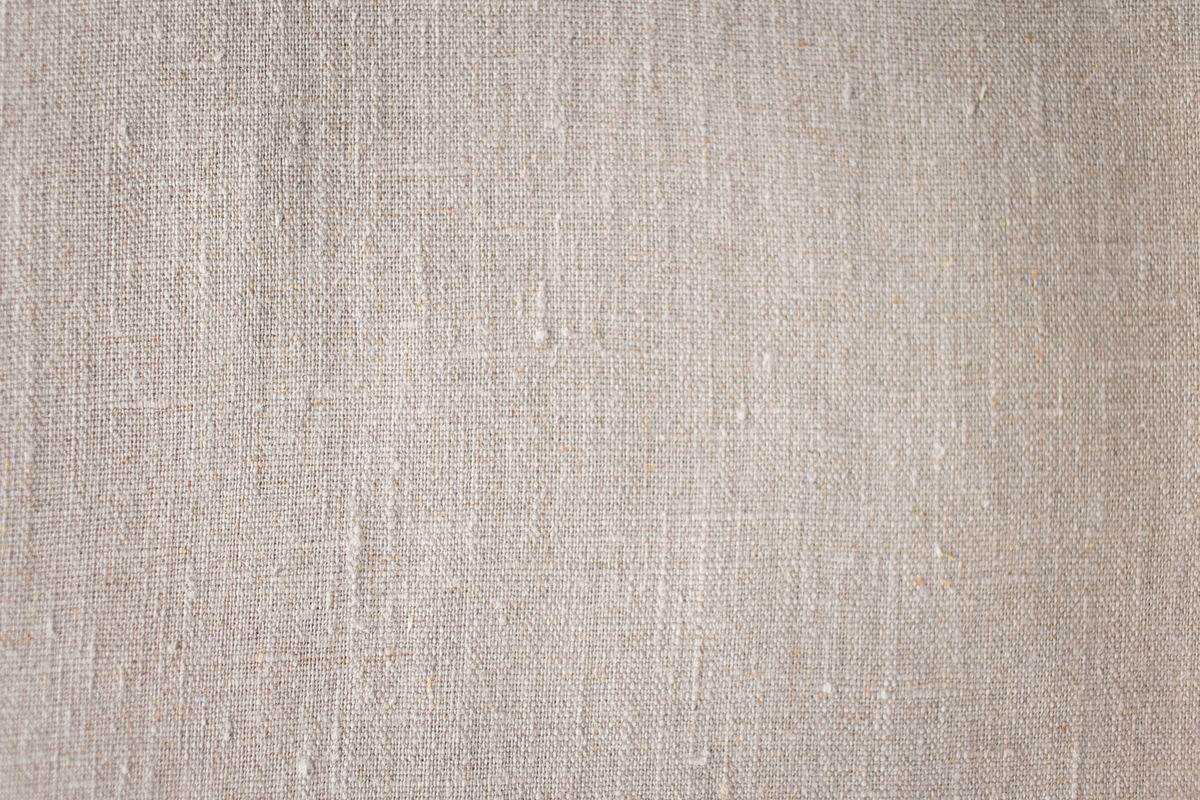
Linen, hemp and organic cotton get treated as variations on a theme — the natural shelf, the same decision three ways. They are not. They come from different parts of different plants, behave differently on the body, and have environmental ledgers shaped differently enough that the better choice changes with what you are making. Start with the warning: picking a natural fibre settles less than it appears to. “Natural” says where a material comes from, not what it cost or how long it lasts.
Hand, drape and feel
Linen comes from the stalk of the flax plant. New linen is crisp, almost stiff, with a dry cool hand and a slubbed surface where yarn thickness varies. It drapes in broad folds rather than clinging and softens over the first dozen washes without losing structure. That stiffness is why linen holds a shape in tailored pieces that a cotton version would collapse in.
Hemp is coarser again, with a substantial, slightly irregular hand and little natural stretch. Most hemp destined for clothing is softened or cottonised — mechanically shortened so it spins more like cotton — and a good hemp shirting lands close to a heavy linen. Cheap hemp blends feel wiry, and quality varies more here than with the other two.
Organic cotton is chemically identical to conventional cotton; nothing about the fibre changes because the farming did. You get the familiar soft, matte hand that takes dye evenly and sits comfortably against skin. Its real advantage is predictability: you know what is arriving.
Breathability and warmth
All three absorb moisture, but they move it differently. Linen is highly hygroscopic and releases moisture quickly, which is why it feels cool in heat — evaporation happens at your skin. It provides little insulation, though. The loose linen shirt that is ideal in July is not a layer in November.
Hemp behaves similarly, with slightly better insulating value because its yarns run thicker and its fabrics heavier. It is still a warm-weather fibre, but mid-weight hemp performs acceptably in cool weather, which makes it the more versatile of the two.
Cotton breathes well dry and badly wet. It absorbs a great deal of water and holds it, so a tee sweated through stays clammy rather than drying itself — the quality that makes cotton right for towels and wrong for a long humid walk. Organic status changes none of it.
Durability, creasing and care
This is where the bast fibres separate most clearly from cotton. Linen and hemp have higher tensile strength, their smooth surfaces resist pilling, and they tolerate frequent laundering. Bought heavy, they wear in rather than wear out; linen sheeting made decades ago is still usable.
The catch is creasing. Flax and hemp have low elasticity, so once a wrinkle forms it stays. That is intrinsic to the fibre rather than a mark of poor quality, though a tight weave helps. Expecting a linen shirt to look pressed at the end of a working day sets you up for disappointment; the crumple is easier to accept than to iron out every morning.
Cotton creases less, recovers better, and is the easiest of the three to launder at scale. It is weaker at the same fabric weight, pills more in blends, and wears through first at cuffs and collars.
All three machine wash well and all three last longer with less frequent washing. None benefits from fabric softener, which deposits a coating that dulls the absorbency that made them worth choosing. Line dry linen and hemp where you can; over-tumble-drying leaves them brittle and sets creases. Cotton tolerates heat but shrinks under it, so cool wash and line dry protects anything whose fit you like.
The environmental ledger
European flax has the strongest cultivation case of the three. Around three-quarters of the world’s long flax fibre is grown in France, Belgium and the Netherlands, largely rain-fed, with few inputs, no irrigation, on long rotations. The bast is separated mechanically rather than dissolved, and every part of the plant gets used. Two conditions attach. Retting — using moisture to loosen fibre from stalk — can be done in the field, which is benign, or in tanks, which produces effluent with a high biological oxygen demand if untreated. The origin standard prohibits the second route, and the flax grown outside that system follows no such rule. And where fibre is grown is not where it becomes cloth; spinning and weaving often happen elsewhere, which erodes the gain when that processing runs on coal.
Hemp’s agronomy is at least as good: it grows fast and tall, produces a lot of biomass per hectare, needs little water, needs effectively no pesticides, and its deep rooting improves soil structure. The costs come later. Much hemp grows in regions without textile processing capacity, so fibre travels a long way, and turning a coarse stalk into wearable yarn takes real work — retting, decortication, then softening or blending. Hemp that wears well has usually been blended with something softer, which complicates its end-of-life.
Organic cotton removes synthetic pesticides and fertilisers, which matters enormously for soil biology, water quality and the health of the people farming it. It does not remove cotton’s appetite for water; that depends mostly on whether the crop is rain-fed or irrigated, and organic status says nothing either way. Lower yields mean producing the same kilogram of fibre tends to take more land. Organic cotton trades a chemical problem for a land one — usually, not always, the better exchange.
What “natural” does not fix
All three fibres are cellulosic and will biodegrade, but only if they are actually composted rather than buried, and only if dyes, finishes, linings and elastic have not turned them into a composite. A natural fibre blended with polyester inherits most of polyester’s end-of-life problems.
Organic status covers the farm and stops there. Nothing about it constrains the dye house, which is why a processing standard stacked on top of a fibre claim does most of the real work — the subject of our piece on what GOTS certification covers. Finishing deserves particular scepticism. Softeners, wrinkle-resistance resins and heavy dye application can each undo much of the cultivation gain, and a garment sold on its fibre content will not say what happened to it afterwards. This is where a residue-testing label such as OEKO-TEX Standard 100 earns its keep.
The thread running through all of it is that none of these three is a bad purchase if the garment is well made and worn often, and all three are wasteful if it is not.
Which fibre for which garment
Linen earns its place in hot-weather shirting, wide trousers, summer dresses and bed linen, where its cool handle is the point and creasing reads as character. It is a poor choice for anything required to stay smooth all day, and for knitwear, since flax does not spin into a yarn with much loft.
Hemp suits things that must survive abrasion: workwear-inspired trousers, structured overshirts, bags, heavier shirting, denim alternatives. It rewards weight and punishes attempts to make it behave like cotton lawn. For anything worn against skin, check how much softening or blending went in, because the range from comfortable to scratchy is wide.
Organic cotton is the right default for basics worn next to the skin, children’s clothing, anything laundered hard and often, and anything where print or colour must register cleanly. Choose it where softness and ease of care dominate, and buy it in the heaviest weight the design can carry.
Whichever you land on, read the rest of the tag before paying. Fibre order and blends change how a garment wears and what can be done with it afterwards; our guide to composition tags covers the small print.
FAQ
- Which natural fibre lasts longest?
- Linen and hemp are bast fibres with higher tensile strength than cotton, so they resist abrasion and pilling and soften rather than wear out. Cotton is easier to launder but generally wears through sooner, especially in lightweight knits and at stress points.
- Is organic cotton automatically a lower-impact choice?
- It avoids synthetic pesticides and fertilisers, which is a meaningful gain for soil and water. The trade-off is that organic yields tend to be lower, so more land is needed for the same amount of fibre, and irrigation needs do not disappear. Organic status also covers farming only, not dyeing or finishing.
- Is linen really lower impact if most of it is shipped halfway around the world?
- Transport is usually a small part of a garment's footprint compared with fibre production, dyeing and how often it is washed. European flax is largely rain-fed and needs few inputs, so its cultivation advantage generally survives processing elsewhere, though it erodes if that processing is coal-powered.
Edited by
Dana Reyes
Researches garment construction, fibre content and brand sustainability claims. Ten years between the retail floor and editorial fact-checking.