Organic Cotton Underwear: What the Certification Covers and What It Doesn't
Sep 25, 2026 · Dana Reyes
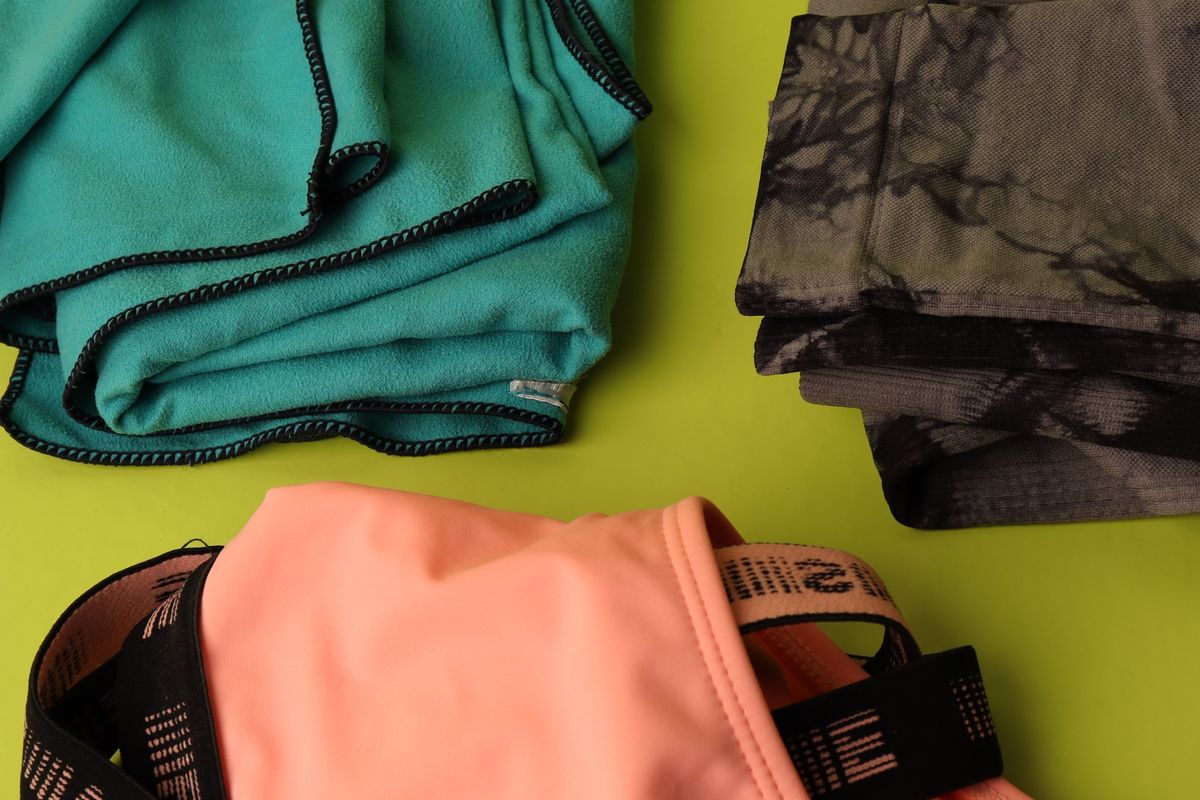
Underwear is the hardest-working garment in a wardrobe and the one where labels do the least work. It sits against skin all day, goes through the wash more often than anything else you own, and is replaced on a cycle rather than repaired. That makes it a reasonable place to spend more and an easy place to spend more badly.
What GOTS certifies on a garment worn against skin
It certifies processing, not farming. The fibre must already be certified organic before GOTS picks it up at the first handling stage; from there the standard covers spinning, knitting or weaving, dyeing, finishing, manufacture and labelling, with annual on-site audits and transaction certificates moving with the goods.
There are two label grades, and the difference is most of the information on the tag: “organic” at 95% certified organic fibre or more, “made with x% organic materials” at 70% or more with the share stated. Below 70% there is no label.
What matters for underwear is what is excluded from that calculation. Accessories are not counted in the fibre percentage; they are held to residue limits instead, and GOTS’s list includes elastic bands and yarns, sewing thread, labels, trims and padding for undergarments. For a garment whose function depends on an elastic waistband, that is a meaningful exclusion: the 95% describes the fabric, not the object.
The chemical rules are where the label earns its keep for skin contact. All chemical inputs — dyes and auxiliaries included — are assessed against toxicity and biodegradability requirements, and the standard bans toxic heavy metals, formaldehyde, aromatic solvents and PFAS outright. Sewing certified fabric in an uncertified factory breaks the chain, so the certificate attaches to a named entity and scope, both of which you can look up. Our piece on what GOTS certification actually means walks through the licence-number check.
What GOTS does not do: it does not test your skin’s response, certify fit, sizing or durability, or say anything about your laundry. A certified garment that does not fit is still a garment you will not wear.
Elastane: the number that decides how long they last
Cotton on its own has almost no recovery: a plain cotton knit stretches under load and stays there, which is why 100% cotton briefs lose their shape through a day and then through a wash. Elastane — polyurethane, sold as spandex or Lycra — is added in small percentages to pull the fabric back, and it is what makes a cotton garment fit at the end of the day as well as the start.
It is also the component that fails first. Elastane degrades under heat and chlorine bleach, cumulatively and irreversibly, which is why care labels on stretch garments specify cold washing and low or no tumble heat. The advice for making underwear last is unglamorous: wash cold, skip the bleach, keep it out of a hot dryer. Those steps protect the cotton too, but they exist mainly for the elastic.
Under GOTS, virgin synthetic fibres including elastane are an allowed additional fibre with a ceiling, and recycled synthetics have a separate, higher one. At the “organic” grade the entire non-organic allowance is small, which is why GOTS-labelled underwear so often sits at roughly 95% organic cotton and 5% elastane: it is the composition that fits the top grade. More stretch than that means the “made with” grade — still certified, still legitimate, just a different claim.
So the trade is not organic versus synthetic. It is which failure mode you prefer: a garment that slowly loses its shape, or one that holds it until the elastic goes and then loses it all at once. The real question is whether you will replace them when it happens.
Sizing and dimensional stability
GOTS has nothing to say about sizing, and this trips people up. It is a process and input standard: two certified garments from two factories can be graded, cut and shrink differently, and the certificate does not distinguish them. Prefer brands that publish garment measurements rather than only S/M/L, and check whether the range is graded in more than one dimension — one that only scales the waist will not fit across the run. Treat the elastane percentage as a tolerance: more stretch forgives more variation between your body and the pattern.
Stability over time is mostly a function of the knit and the elastic. Ribbed knit recovers better than plain jersey at the same fibre content, and an encased waistband behaves differently from one knitted into the body. Product pages rarely describe these details, which is one of the few places customer reviews are informative — not for durability claims, but for whether a brand’s sizing holds from colour to colour.
Dyes and skin irritation: what is documented
Textile contact dermatitis — the clinical term for skin reactions to clothing — is usually caused by chemical additives rather than the fibre. DermNet’s guidance states that allergic reactions to clothing most often result from formaldehyde finishing resins, dyes, glues and other processing additives, and that reactions to the fibres themselves are rare. The dermatology literature identifies disperse dyes, used on synthetics, as the most frequent sensitisers, followed by reactive dyes; formaldehyde resins, applied for wrinkle resistance, are the other documented category. Reported prevalence varies by population and by which dyes are in the panel — these are patch-test populations, not general ones.
What is not documented is that organic cotton fibre is itself gentler on skin. That does not make certification irrelevant here — it makes it relevant for a different reason. GOTS bans several input categories the clinical literature does implicate: formaldehyde and formaldehyde-releasing substances, toxic heavy metals, and dyes failing its toxicity and biodegradability criteria. The defensible claim is that certification reduces exposure to documented triggers, not that it prevents reactions.
Two corollaries. “Undyed” removes one exposure and not others — a finishing resin is separate from colour. And a reaction that persists is a medical question: the diagnostic route is patch testing, interpreted by a dermatologist. No fibre claim substitutes for that.
OEKO-TEX Standard 100 is a complement rather than a replacement. It tests the finished article, trims included, against limit values for a long list of substances, and assigns products to classes by skin contact — underwear sits in the direct-skin-contact class, with tighter limits than outerwear. It is a residue test on a finished object: not an organic standard, not a labour standard, not a durability standard. For a garment worn against skin all day, GOTS for the process plus OEKO-TEX for the finished article is a stronger position than either alone.
Deciding what it is worth
Underwear is a replacement-cycle purchase, so the arithmetic differs from a coat. The relevant figure is price per wear over however long the garment holds its shape, and the denominator is controlled mostly by the elastic and by how you wash.
The premium is justified when the claim is checkable: a named certifier and a licence number you can look up, a stated percentage rather than a vague phrase, and a composition tag that accounts for the whole garment. Our guide to decoding composition tags covers what to look for there.
It is not justified when “organic cotton” appears with no certifier behind it. Organic fibre claims are unverified without a standard, and the Organic Content Standard verifies only the amount of organic material and its chain of custody — not the processing chemistry, which matters most on a garment like this.
And fabric is one lever among several. Fit decides whether the garment gets worn; care decides how long it lasts. To compare fibres on their own terms rather than on a hangtag, our comparison of linen, hemp and organic cotton lays out what actually differs.
FAQ
- Does GOTS certified mean the underwear is 100% organic cotton?
- No. GOTS has two label grades: "organic" requires at least 95% certified organic fibre, and "made with x% organic materials" starts at 70%. Accessories — elastic bands and yarns, sewing thread, trims, labels and padding — are excluded from the percentage calculation and are held to residue limits instead, which matters on a garment built around a waistband.
- Is organic cotton underwear better for sensitive skin?
- The dermatology literature points at chemical additives rather than the fibre. Documented triggers in textile contact dermatitis are dyes and formaldehyde-based finishing resins, and natural cellulose fibres are rarely the allergen. GOTS bans several of those input categories, so it reduces exposure to known triggers rather than eliminating risk. It is not a treatment, and it does not diagnose a reaction.
- How much elastane should underwear have?
- Enough to recover after washing and not much more. Elastane is what keeps a cotton brief from sagging, and it is also the component that fails first — heat and chlorine bleach accelerate that. If you want the longest possible life from the cotton, look for the lower end of the elastane range and wash cold, skip bleach and avoid high tumble-dry heat.
Edited by
Dana Reyes
Researches garment construction, fibre content and brand sustainability claims. Ten years between the retail floor and editorial fact-checking.